The P visa is the nonimmigrant category for people who come to the United States to compete or perform. P-1A covers athletes who compete at an internationally recognized level, individually or as a team, plus professional athletes, certain amateur athletes and coaches, and theatrical ice skaters added by statute. P-1B covers members of an entertainment group that has been internationally recognized as outstanding for a sustained and substantial period. P-2 covers artists in a reciprocal exchange program, and P-3 covers artists who perform, teach, or coach in a culturally unique program. Each is filed on Form I-129 by a U.S. employer, sponsoring organization, or agent with a written consultation from a labor organization, and allows essential support staff and P-4 family members to come along. The P does not require the O-1’s "extraordinary ability," but it is tied to specific events and, except for individual athletes, approved for no more than one year at a time.
Key takeaways
P-1A athletes need a tendered contract (where the sport uses them) plus two of seven types of evidence of international recognition. P-1B is for the group, not the individual: a year of existence, 75 percent of members with the group for a year, and a major international award or three of six evidence types. P-3 turns on cultural uniqueness. Every P petition requires a labor organization consultation unless none exists. An individual P-1 athlete can be approved for up to five years and extended to ten; teams, groups, P-2, P-3, and support staff get up to one year at a time. The I-129 fee is $1,015, or $510 for small employers and nonprofits, plus the Asylum Program Fee.
P-1A: internationally recognized athletes and teams
The rules are in 8 CFR 214.2(p) and section 214(c)(4) of the Immigration and Nationality Act. Internationally recognized means a high level of achievement, shown by skill and recognition substantially above what is ordinarily encountered, so that the achievement is renowned, leading, or well-known in more than one country. A P-1A athlete either has that reputation as an individual or belongs to a foreign team that has it as a unit, and the competition itself must have a distinguished reputation and require athletes of that caliber. The USCIS Policy Manual lists viewership, media coverage, past participants, rankings, and entry requirements as factors; an event open to all skill levels counts against it. The petition needs a tendered contract with a major U.S. league or team, or one commensurate with international recognition in an individual sport, where contracts are normal, plus at least two of the following:
- Significant participation in a prior season with a major U.S. sports league.
- Participation in international competition with a national team.
- Significant participation in a prior season in U.S. intercollegiate competition.
- A written statement from an official of the sport’s governing body explaining how the athlete or team is internationally recognized.
- A written statement from a member of the sports media or a recognized expert in the sport explaining the same.
- An international ranking, if the sport has rankings.
- A significant honor or award in the sport.
Members of a foreign team are classified through the team and may not perform apart from it. The COMPETE Act of 2006 added three statutory routes that skip the international-recognition showing: a professional athlete employed by a team in an association of six or more professional teams with combined revenues over $10 million a year, or by an affiliated minor league team; an athlete or coach on a U.S. team in a foreign amateur league of 15 or more teams that is the top amateur level in its country, costs players their NCAA eligibility, and sends a significant number of players to major or minor league drafts; and athletes in a theatrical ice skating production. When a professional P-1 athlete is traded, work authorization continues automatically for 30 days while the new team files its own petition.
P-1B: internationally recognized entertainment groups
The P-1B belongs to the group, two or more people established as one unit; individual entertainers are not given P-1 status to perform separate and apart from a group. The group must have been established for at least one year, and 75 percent of its members must have had a sustained and substantial relationship with it for at least one year. The petition lists each member with exact dates of employment and proves the group has been internationally recognized as outstanding for a sustained and substantial period, either through nomination for or receipt of significant international awards or through three of these six:
- Starring or leading roles, past and future, in productions or events with a distinguished reputation, shown by reviews, publicity, contracts, or endorsements.
- International recognition and acclaim shown by reviews in major newspapers, trade journals, or other publications.
- Leading or starring engagements for organizations and establishments with a distinguished reputation.
- Major commercial or critically acclaimed success: ratings, box office, record or video sales, standing in the field.
- Significant recognition from organizations, critics, government agencies, or recognized experts, in testimonials that show the author’s authority.
- A high salary or other substantial remuneration, past or future, compared with others in the field.
Two exceptions matter. Circus personnel joining a nationally recognized circus are exempt from both the one-year membership rule and international recognition. And USCIS may waive international recognition for a nationally recognized group when special circumstances, such as limited media access or geography, make recognition in more than one country hard to show.
P-2, P-3, and essential support personnel
P-2 covers artists and entertainers performing under a formal reciprocal exchange agreement between U.S. and foreign organizations, similar on both sides in the caliber of artists, the terms of employment, and the number of people. The petition includes the agreement, a sponsor statement tying the petition to it, evidence that a U.S. labor organization negotiated or concurred with the exchange, and evidence that the artists on both sides are comparable.
P-3 covers artists and entertainers coming to develop, interpret, represent, coach, or teach a unique or traditional ethnic, folk, cultural, musical, theatrical, or artistic form. "Culturally unique" means a style of artistic expression, methodology, or medium unique to a particular country, nation, society, class, ethnicity, religion, tribe, or other group. The program may be commercial or noncommercial. The petition includes letters from recognized experts attesting to the authenticity of the artist’s or group’s skill, or published reviews showing the performance is culturally unique, plus evidence that all of the performances will be culturally unique events.
Essential support (P-1S, P-2S, P-3S) means a highly skilled person integral to the principal’s performance who provides services a U.S. worker cannot readily perform: coaches, trainers, tour managers, and technical crew with a history with the act or team. Support staff cannot be included on the principal’s petition and cannot be substituted at a consulate. They need a separate I-129 with their own labor consultation, a statement of their prior essentiality and experience with the principal, and the contract or a summary of oral terms.
The consultation, the petitioner, and the itinerary
Consultation with an appropriate labor organization is mandatory before any P petition can be approved. The petitioner obtains a written advisory opinion and files it with the petition. A favorable P-1 opinion should describe the achievements, say whether the athlete or group is internationally recognized, and confirm that the services suit that level; a labor organization may instead send a letter of no objection. Consultations are advisory, not binding on USCIS. The requirement is waived only where the petitioner establishes that no appropriate labor organization exists. If no opinion is filed, USCIS forwards the petition to the labor organization, which has 15 days to comment.
A P-1 petition is filed by a U.S. employer, a U.S. sponsoring organization (one that will not employ the beneficiary but vouches for the petition’s terms), a U.S. agent, or a foreign employer through a U.S. agent; a foreign employer may never petition directly. An agent acting as the employer must set out the wage and terms in a contract; an agent representing multiple employers must file a complete itinerary with the dates of each engagement and the names and addresses of the actual employers and venues. Without an agent, each employer using the beneficiary in the same period needs its own petition.
Any petition involving work in more than one location, such as a tour or a road season, must include an itinerary with dates and locations. An "event" is defined broadly: a season, tournament, tour, or engagement, including promotional appearances and incidental stopovers; for a P-1 athlete it may be the length of the contract. A petition may not be filed more than one year before the services are needed, and up to 25 named beneficiaries fit on one petition. Material changes in the terms of employment require an amended petition. If employment ends for reasons other than resignation, the employer and petitioner are jointly liable for the reasonable cost of return transportation.
Bringing a team, a tour, or a visiting artist to the United States?
Request a free consultation. We tell you which P classification fits, whether an agent petition or separate employer petitions make sense, which labor organization to consult, and what the itinerary needs to show, on a flat fee quoted in writing.
Validity, extensions, and P-4 dependents
Validity follows the event. The beneficiary may be admitted for the petition period plus up to 10 days before and after, though work is allowed only during the validity period. Extensions are requested on Form I-129 to continue or complete the same event, with the beneficiary in the United States when filed.
| Classification | Initial petition | Extensions | Total |
|---|---|---|---|
| P-1A individual athlete | Up to 5 years | Up to 5 years | Not more than 10 years |
| P-1A athletic team | Time needed for the event, not more than 1 year | Increments of 1 year | Tied to the event |
| P-1B entertainment group | Not more than 1 year | Increments of 1 year | Tied to the event |
| P-2 and P-3 | Not more than 1 year | Increments of 1 year | Tied to the event |
| Essential support | Not more than 1 year | Up to 5 years for an individual athlete’s support; otherwise 1 year | Follows the principal |
| P-4 spouse and children | Same as the principal | Same as the principal | Same as the principal |
P-4 is for the spouse and unmarried minor children of a P-1, P-2, or P-3 principal who accompany or follow to join. They receive the same period of admission as the principal and may study, but may not work unless granted employment authorization, and P-4 is not among the dependent classes listed in 8 CFR 274a.12 as eligible for a work permit. For those planning to stay, an approved labor certification or a pending immigrant petition is not a basis for denying a P petition, extension, or admission, so a P-1 athlete can pursue an EB-1 or other green card while competing; support personnel do not get that protection.
Fees, processing times, and P-1 compared with O-1
The fees below come from the USCIS fee regulation at 8 CFR 106.2 and 106.4 as in force on November 1, 2026. A small employer has 25 or fewer full-time equivalent U.S. employees, counting affiliates; a nonprofit means a 501(c)(3), a nonprofit school or college, or a governmental research organization. One I-129 fee covers up to 25 named beneficiaries, so a full roster or band is one fee, and unlike the H-1B there is no fraud prevention or ACWIA fee.
| Fee | Standard | Small employer | Nonprofit | Notes |
|---|---|---|---|---|
| Form I-129, P classification, 1 to 25 named beneficiaries | $1,015 | $510 | $510 | A $50 online filing discount applies to the standard fee where USCIS offers online filing, not to the reduced rate |
| Asylum Program Fee | $600 | $300 | $0 | Paid with every I-129 |
| Premium processing, Form I-907 | $2,965 | $2,965 | $2,965 | Optional; USCIS acts within 15 business days |
| Separate I-129 for essential support personnel | Same fees again | Same fees again | Same fees again | Support staff cannot ride on the principal’s petition |
Without premium processing, P petitions wait in the regular service center queue, and the regulation allows no walk-in adjudication even in an emergency, so check current processing times before committing to a season or tour date. With premium processing, USCIS must issue an approval, denial, request for evidence, or notice of intent to deny within 15 business days, and the clock restarts when an RFE response arrives; our premium processing guide covers the mechanics. Add time for the labor consultation and, for beneficiaries abroad, the consular visa appointment.
Teams and promoters often ask whether an athlete or performer should use the P-1 or the O-1. Both are filed on Form I-129 by an employer or agent, need a consultation, and tolerate a pending green card. The differences are the standard of proof, the group question, and the length of approval.
| P-1A / P-1B | O-1A / O-1B | |
|---|---|---|
| Standard | Internationally recognized: renowned, leading, or well-known in more than one country | Extraordinary ability: the small percentage at the very top of the field (O-1B arts: distinction) |
| Evidence | Athletes: contract plus 2 of 7. Groups: award or 3 of 6 | Major award or at least 3 of 8 criteria, then a review of the record as a whole |
| Groups | P-1B is for the group as a unit | Individual only; each member needs an O-1 case |
| Consultation | Labor organization in the sport or field | Peer group, labor organization, or expert |
| Initial validity | Individual athlete up to 5 years; teams and groups up to 1 year | Up to 3 years |
| Extensions | Athletes up to 5 more years, 10 total; others 1-year increments | 1-year increments for the same event |
| I-129 fee | $1,015 ($510 small employer or nonprofit) | $1,055 ($530 small employer or nonprofit) |
| Support staff | P-1S, separate petition | O-2, separate petition |
A rough rule: an established band, dance company, or national-team-level athlete usually fits the P-1 with less evidence and, for an individual athlete, a longer approval. A solo artist, or an athlete whose record does not fit the P criteria, is often better served by the O-1. Our guide to the O-1 for startup founders explains the O-1 criteria and the agent petition, and our work visa practice covers the other categories.
Common RFE themes, and how Atlas Immigration Law helps
Requests for evidence on P petitions tend to track the regulation’s checklist:
- The event, not just the person. The competition or production must itself have a distinguished reputation that requires internationally recognized participants.
- Group tenure. A P-1B petition without the member-by-member list of start dates, or where fewer than 75 percent of members clear one year.
- "Sustained and substantial." One festival season or a single viral release does not show recognition over time; spread the evidence across years and countries.
- Cultural uniqueness. P-3 letters that praise talent but never say what makes the form unique to a culture, or itineraries that mix in mainstream repertoire.
- Itinerary and consultation gaps. Agent petitions with no venues or actual employers named, and a missing or unsigned advisory opinion.
We prepare P-1, P-2, and P-3 petitions for teams, leagues, promoters, venues, festivals, universities, and agents in all 50 states and abroad: choosing the classification and petitioner, obtaining the labor consultation, building the itinerary and an evidence file mapped to each criterion, and filing the support staff petition alongside. Every case runs on a flat fee agreed in writing and billed at milestones, with a dedicated paralegal reachable by call, email, or text, a client portal for tracking each step, and attorney Jordan Weinberg, our founder and lead attorney, reviewing every filing. Atlas is based in Dallas and works with sports and entertainment employers nationwide through our employer sponsorship practice; to discuss a season, a tour, or a single visiting artist, request a consultation at /contact.
Frequently asked questions
What is the difference between P-1A and P-1B?
P-1A is for athletes and athletic teams, including major and minor league professionals, certain amateur athletes and coaches, and theatrical ice skaters. P-1B is for members of an entertainment group that has been internationally recognized as outstanding for a sustained and substantial period. Both are filed on Form I-129 with a labor organization consultation.
Can a solo musician or performer get a P-1B visa?
No. The P-1B is granted to a group of two or more people performing as a unit, and individual entertainers are not given P-1 status to perform apart from a group. A solo artist usually looks at the O-1B, or at the P-3 if the performance is culturally unique, or the P-2 if an exchange program applies.
How long can a P-1 athlete stay in the United States?
An individual P-1A athlete can be approved for up to five years and extended for up to five more, for a total of not more than ten years. Teams, entertainment groups, P-2 and P-3 artists, and essential support personnel are approved for the time needed for the event, not more than one year at a time, with one-year extensions for the same event.
Is the labor organization consultation always required?
Yes, unless the petitioner establishes that no appropriate labor organization exists for the field, in which case USCIS decides on the record. Otherwise the petition must include a written advisory opinion or a letter of no objection from a labor organization with expertise in the sport or entertainment field. The opinion is advisory and does not bind USCIS.
How much does a P visa petition cost in government fees?
Under 8 CFR 106.2, the Form I-129 fee for a P petition with up to 25 named beneficiaries is $1,015, or $510 for small employers with 25 or fewer full-time equivalent U.S. employees and for nonprofits. The Asylum Program Fee adds $600, $300 for small employers, or nothing for nonprofits. Optional premium processing costs $2,965 and brings action within 15 business days. Essential support staff need a separate petition with its own fees.
Can my spouse work on a P-4 visa?
No. A P-4 spouse or child receives the same period of admission as the principal and may study, but may not work unless granted employment authorization, and P-4 is not one of the dependent categories eligible for a work permit under 8 CFR 274a.12. A spouse who wants to work needs a work-authorized status of their own.
This guide is part of our work visa services for employers — the service page covers eligibility, fees, and how we handle these cases.
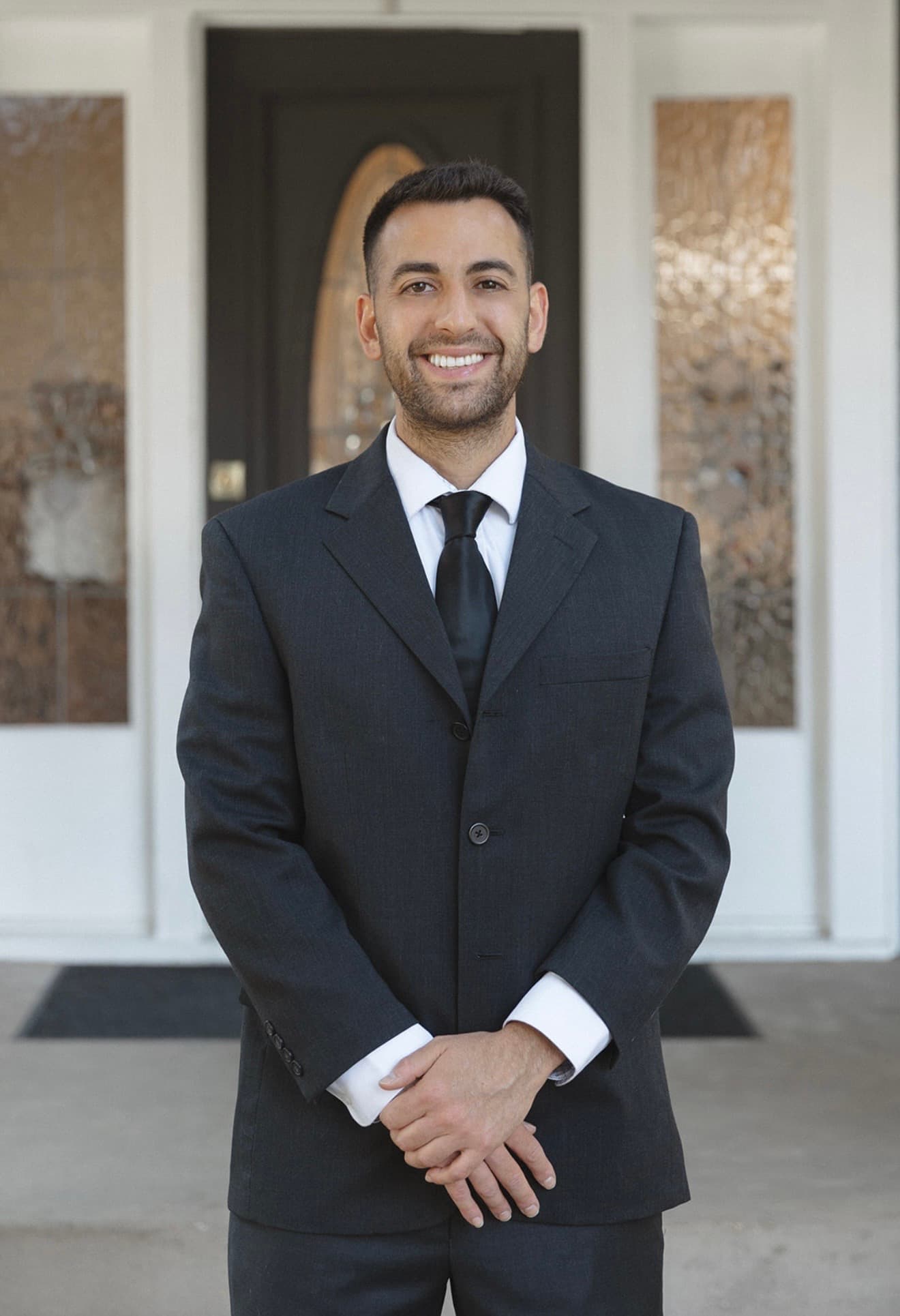
Founder & Managing Attorney, Atlas Immigration Law
Member of the American Immigration Lawyers Association (AILA) and the Dallas Bar Association. Licensed to practice in Texas; fluent in English and Spanish.
Legally reviewed by a licensed immigration attorney
Talk to an immigration attorney about your case
Free consultation on request, flat fees, and a dedicated paralegal who knows your case — serving clients in all 50 states.
This guide is general information, not legal advice, and reading it does not create an attorney-client relationship. Immigration law and procedures change, and how they apply depends on your specific facts — consult a licensed immigration attorney about your situation.