
A virtual immigration lawyer represents clients remotely — consultations by video, documents through a secure portal, filings submitted to federal agencies — and can do so legally for clients in any state, because immigration law is federal. An attorney licensed in one state may practice immigration law before USCIS, the immigration courts, and the consulates on behalf of clients anywhere in the country and abroad. Atlas Immigration Law works this way by design: a physical office in Dallas paired with fully remote representation in all 50 states, flat transparent fees, a free 20-minute consultation, and the Atlas Vision client portal for questionnaires, secure uploads, and real-time case tracking. For most immigration matters, the quality of the lawyer matters far more than the lawyer’s zip code.
Key takeaways
Because immigration is federal law, a licensed immigration attorney can represent you from anywhere in the U.S. — your case is filed with the same USCIS service centers and decided under the same law regardless of where your lawyer sits. Remote representation runs on video consultations, secure document exchange, and electronic case tracking; only a few events — biometrics, interviews, court hearings — happen at a physical location, and your lawyer prepares you for those the same way either way.
Why your lawyer’s location doesn’t limit you
Most areas of law are state law — a Texas divorce needs a Texas-licensed lawyer. Immigration is different: it is governed by federal statutes and regulations and administered by federal agencies. An attorney admitted to any state bar may represent clients in immigration matters nationwide, before USCIS, the Executive Office for Immigration Review, the Department of State, and the Department of Labor. Your marriage-based green card case in Seattle, an H-1B employer in Atlanta, and a naturalization applicant in rural Montana are all filing under exactly the same law, often to the same service centers — a point our guide to how long the I-130 process takes illustrates: the timeline depends on the agency, not on where you or your lawyer live.
This has a practical consequence worth internalizing: you are not limited to whoever happens to practice immigration law within driving distance. You can choose a firm based on what actually predicts a good experience — depth in your case type, responsiveness, fee transparency, and reviews — and hire them from anywhere. Families abroad do this routinely; there is no reason someone in the U.S. cannot.
How remote representation actually works
| Stage | How it happens remotely |
|---|---|
| 1. Consultation | A video or phone meeting — at Atlas, a free 20-minute consultation — where the attorney assesses eligibility and outlines strategy and a flat-fee quote. |
| 2. Engagement | The representation agreement is signed electronically; the scope and fee are in writing before any work begins. |
| 3. Information gathering | Structured online questionnaires replace paper intake; supporting documents are uploaded to a secure portal rather than mailed or hand-delivered. |
| 4. Preparation and review | The attorney prepares the forms and legal filings; the client reviews everything and asks questions by video, phone, or portal message. |
| 5. Filing | Applications go to USCIS and other agencies by e-filing or mail from the firm — identical to how a "local" firm files. |
| 6. Tracking and follow-through | Receipt notices, biometrics appointments, requests for evidence, and decisions are tracked in the portal, with the attorney handling responses. |
Done well, this is not a degraded version of in-person service — it is usually faster and better documented. Every document lives in one place, nothing is lost in a mail pile, and clients can check status at midnight instead of waiting for office hours. The Atlas Vision portal was built around exactly this workflow: guided questionnaires, secure uploads, and real-time visibility into each stage of the case.
What still happens in person — and how that’s handled
A few events in an immigration case are physical no matter who represents you, and it is worth being clear-eyed about them:
- Biometrics appointments — fingerprints and photos at the USCIS Application Support Center nearest *you*, not your lawyer. No attorney attends these regardless of location.
- USCIS interviews — held at the field office serving your home address. Attorneys prepare clients thoroughly in advance and, where appearance is appropriate, can attend in person or, when offered, remotely.
- Immigration court hearings — held at the court with jurisdiction over the case; many courts also conduct hearings by video. Court representation is a distinct engagement to discuss explicitly with any firm, local or remote.
- Consular interviews abroad — attorneys do not attend these anywhere; preparation is the service, and it is identical delivered remotely.
The real question to ask any firm
Not "where is your office?" but "who prepares me for my interview, how do I reach my attorney, and how fast do you respond?" A prepared client with a responsive attorney two time zones away is in a far better position than a walk-in client whose local firm takes a week to return calls.
Wondering where your case fits in these timelines?
Request a free consultation and get a straight answer on your category, your realistic timeline, and the flat fee — before you commit to anything.
When virtual representation fits — and when to think harder
For the large majority of immigration matters — family petitions, green cards, naturalization, work visas, employer programs — remote representation is a complete substitute for in-person service, because the case itself is conducted on paper with a federal agency. It is an especially good fit for people outside major metro areas with few immigration lawyers nearby, for employers managing cases across multiple states, and for families whose members are spread across the country or abroad.
Think harder — and ask more questions — when a case involves frequent immigration court appearances, since courtroom logistics make attorney location one real factor among several, or when you simply know you will want to sit across a table from your lawyer. A hybrid firm answers both: Atlas serves clients in person at its Dallas office and remotely everywhere else, so the mode of service is a choice rather than a constraint.
Costs and timeline
Virtual representation involves the same two cost categories as any immigration case: government filing fees, which are set by the agencies and identical no matter who represents you — current amounts are on the USCIS fee schedule — and attorney fees. Atlas charges flat fees quoted in writing at the consultation, so remote clients know the full cost before engaging, with no hourly billing and no surprise charges for calls or messages.
Processing timelines are likewise identical for remote and local clients: your case is decided by the same service centers and field offices at the same pace. Times vary widely by form and office — check the official USCIS processing times tool for your form, and our plain-English overview of current processing times for context. Where a lawyer does affect speed is in avoiding the self-inflicted delays: incomplete filings, missed requests for evidence, and slow document collection — precisely the things a portal-driven workflow is built to prevent.
How Atlas Immigration Law helps
Atlas Immigration Law was built as a modern hybrid practice: a Dallas office at 1920 McKinney Ave for clients who want to meet in person, and a fully remote workflow that serves clients in all 50 states and abroad with no loss of service quality. The firm was founded by Jordan Weinberg, an immigration attorney licensed in Texas and a member of AILA and the Dallas Bar Association, and it holds a 4.8-star Google rating from clients served both in person and remotely.
- A dedicated paralegal and same-business-day responses — remote never means unreachable.
- Atlas Vision client portal — guided questionnaires, secure document uploads, and real-time case tracking from any device.
- Flat, transparent fees quoted in writing before you engage.
- Service in English and Spanish, wherever you are.
- A free 20-minute consultation by video or phone — request it here and judge the remote experience for yourself before committing.
Frequently asked questions
Can an immigration lawyer in another state really handle my case?
Yes. Immigration law is federal, so an attorney licensed in any state can represent clients before USCIS, the immigration courts, and U.S. consulates regardless of where the client lives. Your case is filed under the same law and to the same federal offices no matter where your lawyer’s desk is.
Is a virtual immigration lawyer as effective as a local one?
For most matters, yes — the case is conducted on paper with federal agencies, so preparation quality and responsiveness are what matter. The events that happen in person, like biometrics and interviews, occur at the government office nearest you regardless of where your lawyer is, and a good remote firm prepares you for them just as thoroughly.
How do I send documents to a virtual immigration lawyer?
Through a secure client portal rather than email or mail. At Atlas, the Vision portal provides guided questionnaires and encrypted document uploads, and everything you submit is organized in one place that both you and your attorney can see — which also makes responding to any request for evidence faster.
Will my USCIS interview be remote too?
Interviews are scheduled at the USCIS field office serving your home address, and most are in person. Your attorney prepares you in advance regardless of location, and attorney appearance at interviews — in person or by remote means where USCIS offers them — is something to discuss for your specific case type.
Do virtual consultations cost anything at Atlas?
The initial 20-minute consultation is free, by video or phone. You leave with an honest read on your options and, if you choose to proceed, a written flat-fee quote — so you can compare firms with full information before spending anything.
Does hiring a remote lawyer change my processing time?
No. Government processing times depend on the form, the service center, and the field office handling your case — not on your lawyer’s location. Check the USCIS processing times tool for current figures. What a lawyer influences is avoiding preventable delays: complete filings, prompt responses to requests for evidence, and organized documents.
Can Atlas help me if I live outside the United States?
Yes. The same federal-law principle applies to consular cases: petitions are filed with USCIS and interviews happen at the U.S. consulate abroad, so representation is inherently remote for at least one side of the case. Atlas regularly represents petitioners and beneficiaries who are in different countries, coordinating both through the portal.
This guide is part of our Dallas immigration lawyer services — the service page covers eligibility, fees, and how we handle these cases.
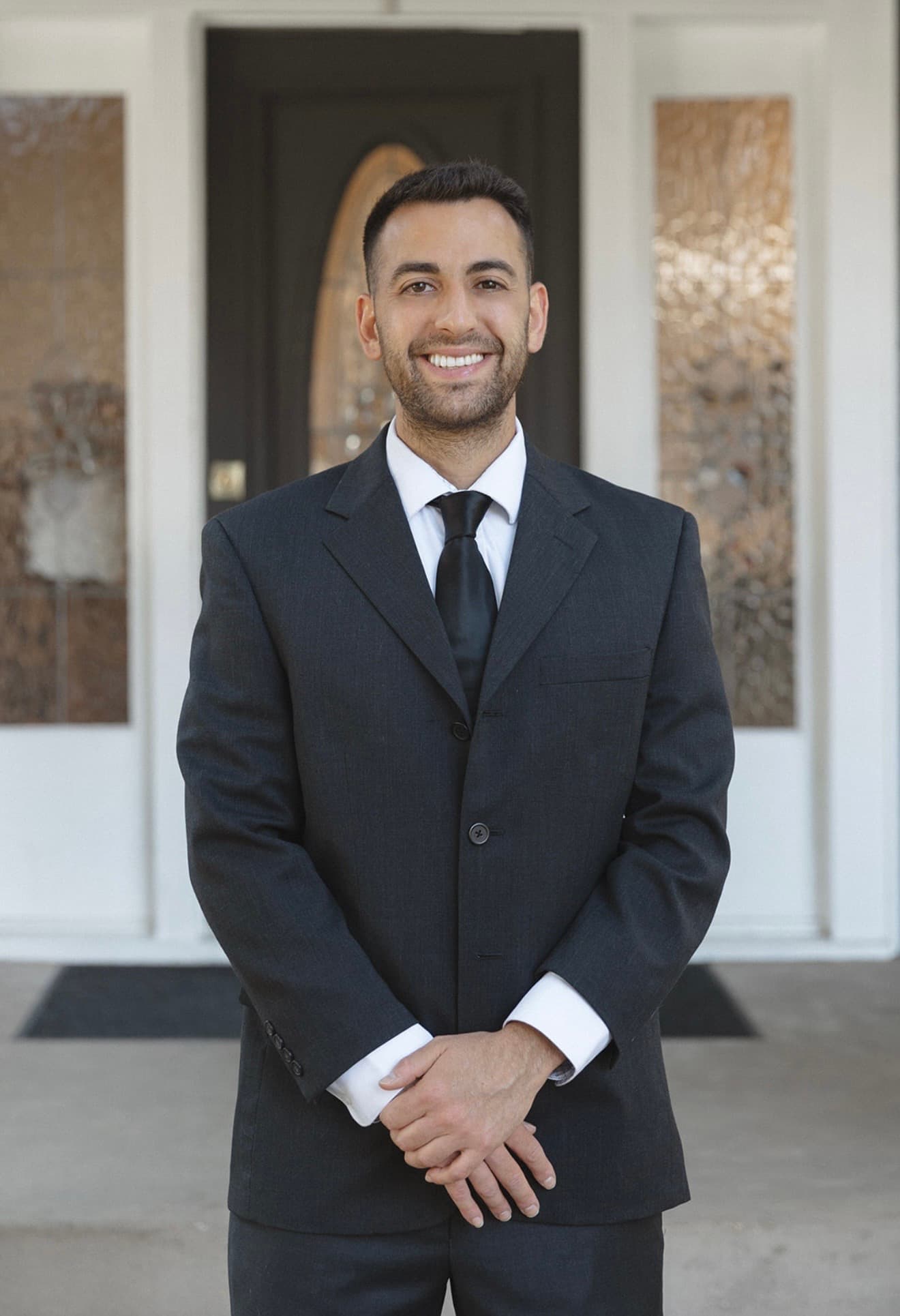
Founder & Managing Attorney, Atlas Immigration Law
Member of the American Immigration Lawyers Association (AILA) and the Dallas Bar Association. Licensed to practice in Texas; fluent in English and Spanish.
Legally reviewed by a licensed immigration attorney
Talk to an immigration attorney about your case
Free consultation on request, flat fees, and a dedicated paralegal who knows your case — serving clients in all 50 states.
This guide is general information, not legal advice, and reading it does not create an attorney-client relationship. Immigration law and procedures change, and how they apply depends on your specific facts — consult a licensed immigration attorney about your situation.