
A same-sex spouse gets a green card the same way any spouse does: Form I-130, then adjustment of status in the U.S. or an immigrant visa abroad. USCIS and the State Department recognize the marriage if it was legal where it took place, even if your spouse’s home country bans it. Atlas Immigration Law handles same-sex spouse and fiancé cases from our Dallas office for couples in North Texas and all 50 states.
Key takeaways
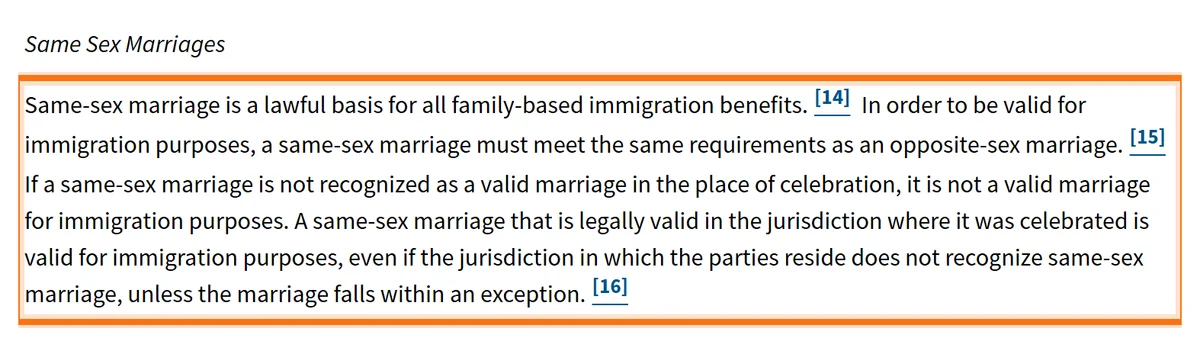
Same forms, same fees, same standards: USCIS calls same-sex marriage "a lawful basis for all family-based immigration benefits." What counts is the law of the place where you married, not where you live or where your spouse was born. A civil union or domestic partnership usually does not count; a marriage does. U.S. citizens can use the K-1 fiancé visa, and the wedding can be in any state. The evidence that the marriage is real is where same-sex cases most often need extra planning.
Is the green card process different for same-sex couples?
No. Since the Supreme Court struck down the federal Defense of Marriage Act in United States v. Windsor (2013), federal immigration agencies have recognized same-sex marriages. The Court’s 2015 decision in Obergefell v. Hodges made same-sex marriage legal in every state, including Texas, and the Respect for Marriage Act of 2022 wrote federal recognition into statute. USCIS cites all three in its Policy Manual.
In practice that means a same-sex couple files the same forms, pays the same fees, and meets the same four tests as any couple. USCIS asks whether the marriage:
- Is legally valid where it was celebrated, meaning where the ceremony took place or the certificate was issued.
- Is consistent with U.S. public policy. This screens out polygamy and some marriages involving minors or close relatives, not same-sex marriage.
- Is real (bona fide), entered to build a life together and not to get a green card.
- Was between two people free to marry, so every earlier marriage of either spouse had legally ended.
The citizen or green card holder carries the burden of proving all four. Our step-by-step guide to the marriage-based green card process covers the forms in order. This guide covers what is different in practice for same-sex couples: where you married, what relationship you have on paper, the evidence, and safety.
Where you married decides: the place-of-celebration rule
The law that matters is the law of the place where you married. If the marriage was legal there, the State Department and USCIS treat it as a marriage, whether you married in Dallas, in another state, or abroad.
Two consequences follow, and both help same-sex couples. First, your current home state does not change the answer: a valid marriage stays valid if you move. Second, your spouse’s home country does not change it either. The State Department’s Foreign Affairs Manual, the rulebook consular officers use, says the marriage is valid even if your spouse applies for the visa in a country where same-sex marriage is illegal.

What you need is the civil marriage certificate from the authority that registered the marriage. USCIS says a marriage license alone does not prove a marriage, and a religious or symbolic ceremony that was never registered is not a marriage for immigration purposes. If the certificate is not in English, it needs a full English translation with the translator’s certification.
Civil unions and domestic partnerships usually do not count
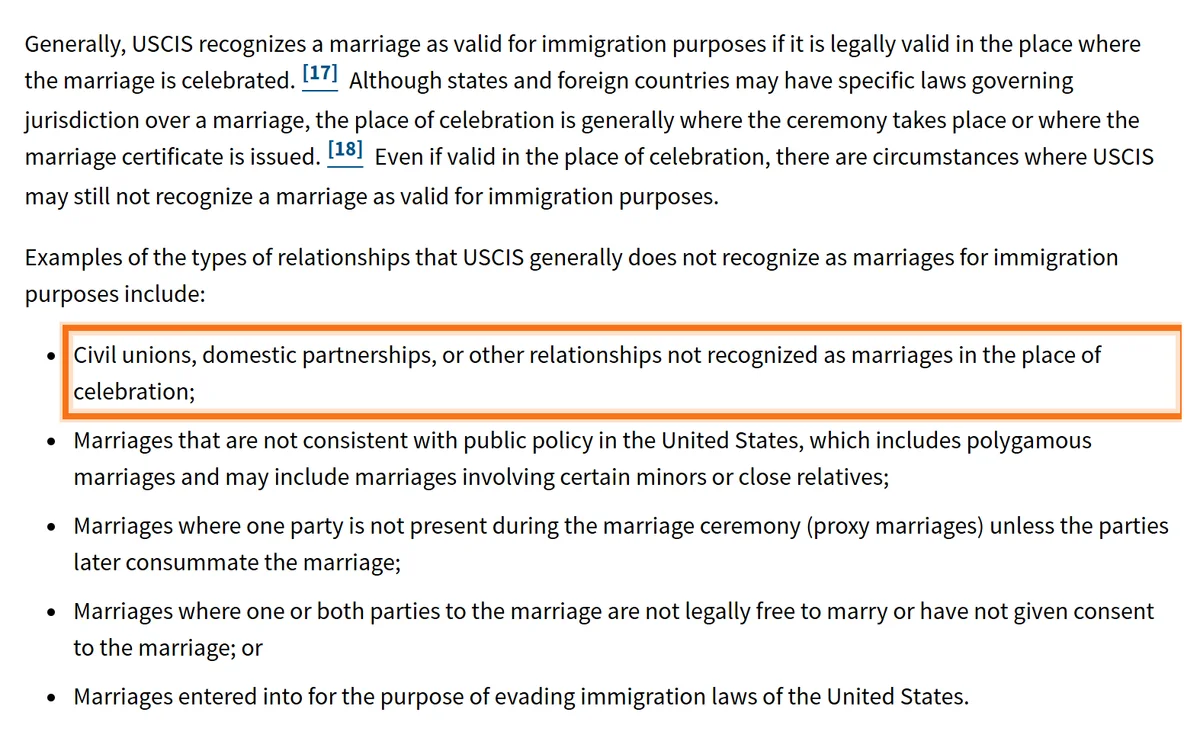
Many couples who have been together for years have a civil union, a registered partnership, or a domestic partnership from a time or place where marriage was not available. USCIS lists these among the relationships it generally does not recognize as marriages. The State Department makes one exception: a civil union counts only if the place where it was made treats it as equal in every respect to a marriage. Few partnership laws meet that test, and proving it takes legal research about that country’s law.
The usual fix is simple: get married. A wedding in Texas or any other state creates a marriage USCIS recognizes from the wedding date. Two things to plan for. The years you spent in a partnership still count as evidence of a real relationship, so keep those records. And if you have been married less than 2 years when your spouse becomes a resident, the green card is conditional for 2 years, and you file Form I-751 to remove the conditions before it expires.
| Your situation | Counts as a marriage? | Why |
|---|---|---|
| Married in Texas or any other U.S. state | Yes | Legal in every state since 2015 |
| Married abroad in a country that allows same-sex marriage | Yes | Valid where celebrated |
| Married where it is legal, but your spouse is from a country that bans it | Yes | The home country’s law does not decide it, even for an interview held there |
| Civil union or domestic partnership treated as fully equal to marriage where it was made | Possibly | Must be equal in all respects; this needs proof of that country’s law |
| Civil union or registered partnership with fewer rights than marriage | No | USCIS generally does not recognize it as a marriage |
| Religious or symbolic ceremony that was never registered | No | There is no civil marriage, and a license alone is not proof |
| Engaged, one partner a U.S. citizen | Not yet | Use the K-1 fiancé visa or marry first |
| Married, but an earlier marriage of either spouse was never finalized | No | Neither spouse was free to marry |
How to read this table: find your row before you file anything. A "Yes" means the same-sex part of your case raises no legal issue, and the work is in the ordinary evidence. A "Possibly" or "No" means the first step is a marriage, or a fix to an earlier divorce, not a petition. The last row catches more couples than people expect, and our guide to prior marriages and missing civil documents explains how to prove an earlier marriage ended.
Which path: adjustment, a spouse visa, or a K-1 fiancé visa
The path depends on who is sponsoring, where your partner is now, and whether you are married yet. None of this changes for same-sex couples.
- Your spouse is in the U.S. after a lawful entry. A U.S. citizen can usually file Form I-130 ($675 on paper, $625 online) and Form I-485 ($1,440 on paper, $1,390 online) together, and your spouse waits in the U.S. This is adjustment of status. How your spouse entered matters a great deal, so check before you file.
- Your spouse lives abroad. You file the I-130, the case moves to the National Visa Center, and your spouse interviews at a U.S. embassy or consulate for an immigrant visa. Our spouse visa page explains the CR-1 and IR-1.
- You are engaged and you are a U.S. citizen. The K-1 fiancé visa (Form I-129F, $675) brings your partner here to marry within 90 days of arrival. USCIS requires that you are both legally free to marry and that you met in person in the 2 years before filing, unless a waiver applies. Because same-sex marriage is legal in every state, the wedding can be in Dallas or anywhere else in the U.S.
- You hold a green card, not citizenship. You can petition for your spouse, but not for a fiancé. Marry first.
For a couple deciding between the fiancé route and marrying abroad first, our comparison of the K-1 fiancé visa and the CR-1 spouse visa sets out cost, speed and work rights side by side. Waits change often, so check our current processing times before you choose.
Not sure your marriage or partnership qualifies?
Tell us where and when you married or registered, where your partner lives now, and how they entered the U.S. if they are here. In a free 20-minute consultation we can tell you whether you can file now, and which path fits.
Proving a real marriage when family or a home country is not supportive
USCIS asks every couple for proof that the marriage is real. Its Policy Manual lists the usual kinds: joint ownership of property, a joint lease, shared finances, birth certificates of children born to the couple, and affidavits from people who know the relationship. Same-sex couples often have strong records here. What they sometimes lack is the kind of proof that comes from family: a large wedding with both families, holidays with parents, relatives who will vouch for them.
That gap is common and it can be explained. Some practical points:
- Lean on the records you control. A lease or deed in both names, joint bank and credit accounts, insurance listing each other, tax returns filed as married, and shared bills carry more weight than photos.
- Use friends, coworkers and chosen family. USCIS says a third-party affidavit must give the writer’s full name and address, date and place of birth, and how they know about the marriage. Specific, dated memories beat general praise.
- Explain what is missing. If your spouse could not list you on a lease or an account at home without risk, or relatives did not attend the wedding, a short, honest statement explaining why is better than leaving an officer to guess.
- Keep communication records from any time apart. Calls, messages and travel records show a relationship maintained across distance.
- Expect a normal interview. USCIS may interview you together or separately. The questions are about your life together, not about your orientation.
Our bona fide marriage evidence guide ranks the proof USCIS gives the most weight and explains how to fill gaps.
Stepchildren and children of a same-sex couple
A U.S. citizen or green card holder can petition for a spouse’s child as a stepchild. The State Department applies the same stepchild rule to every marriage: the marriage must be valid for immigration purposes, and the child must have been under 18 on the date of the wedding. The step-relationship can exist even if the stepparent and child have never met.
For the petition, USCIS asks for the child’s birth certificate naming the parent you married, your marriage certificate showing the wedding happened before the child turned 18, and proof that any earlier marriages of you and the child’s parent ended. Two planning points:
- The wedding date can decide the child’s eligibility. A couple in a civil union who marries after the child’s 18th birthday may find the child does not qualify as a stepchild. Check the dates before you set a wedding date.
- A fiancé visa can carry children. On a K-1, a fiancé’s unmarried children under 21 can come as K-2 children on the same petition.
Children born or adopted during the marriage can raise their own questions, such as which parent is the legal parent on the birth record. Those depend on the facts and the law of the place of birth, so bring the documents to a consultation.
When going back to the home country is unsafe
Consular processing means your spouse attends a visa interview at a U.S. embassy or consulate, usually in the country where they live. The State Department says the marriage is valid there even if that country bans same-sex marriage. Validity is a legal question, though, and safety is a practical one. If your spouse is at risk at home, tell us before you choose a path, because the order of steps and the place of the interview can sometimes be planned around it.
Some partners are in danger in their home country because of who they are. Asylum is a separate case from a marriage petition. It protects people who fear persecution on account of race, religion, nationality, political opinion, or membership in a particular social group, and USCIS says to file the application, Form I-589, within 1 year of arrival in the U.S. Whether a particular fear qualifies depends on the facts. If this applies to your partner, read our Dallas asylum guide and ask about both options at the same consultation, because one can affect the other.
Do not plan a visitor entry around a wedding
A partner who enters on a visitor visa or the visa waiver program already intending to marry and stay can be found to have misrepresented the trip. That can sink the green card and follow them for years. If your partner is abroad, choose the fiancé visa or the spouse visa, and get advice before any trip that includes a wedding.
How Atlas Immigration Law helps
Same-sex marriages are part of our family immigration practice, alongside spouse visas, K-1 fiancé visas and removal of conditions. We start by confirming the marriage qualifies: where it was celebrated, any earlier partnership or marriage on either side, and both immigration histories. Then we choose the route, adjustment or consular processing, a spouse visa or a fiancé visa, and build the evidence file, including the affidavits and explanations a same-sex case often needs.
The practice is led by Jordan Weinberg, founder and managing attorney, licensed in Texas and a member of AILA and the Dallas Bar Association. You get a free 20-minute consultation, a flat fee quoted in writing at the consultation and billed by milestone, a dedicated paralegal reachable by call, email or text, same-business-day responses, and a client portal. Immigration law is federal, so we work with couples in all 50 states from our office at 1920 McKinney Ave in Dallas. Call (945) 219-5599.
Frequently asked questions
Can an immigration attorney handle a same-sex marriage green card case nationwide?
Yes. Immigration law is federal, so the same rules apply in every state. Atlas Immigration Law lists same-sex marriages among its spouse and fiancé services and represents couples in all 50 states from its Dallas office, with consultations by phone or video and documents shared online.
Does USCIS treat same-sex marriages differently?
No. USCIS says same-sex marriage is a lawful basis for all family-based immigration benefits and must meet the same requirements as any marriage: legal where celebrated, consistent with public policy, real, and between two people free to marry. The forms and fees are the same.
My spouse’s home country does not recognize same-sex marriage. Can they still get a green card?
Yes, if the marriage was legal where it took place. The State Department’s rule is that the marriage is valid for visa purposes even if your spouse applies in a country where same-sex marriage is illegal. If living there or attending the interview there is unsafe, raise it before choosing the path.
Does a civil union or domestic partnership qualify for a spouse green card?
Usually not. USCIS generally does not recognize civil unions or domestic partnerships as marriages. The State Department accepts one only if the place it was made treats it as equal in all respects to marriage. Most couples in that position marry, and the years of partnership still help as evidence that the relationship is real.
Can a U.S. citizen get a K-1 fiancé visa for a same-sex partner?
Yes. The K-1 rules are the same for every couple: the petitioner must be a U.S. citizen, you must both be legally free to marry, you must have met in person in the 2 years before filing unless a waiver applies, and you must marry within 90 days of arrival. The wedding can be in any state.
What if our families will not support the marriage or write letters?
Family letters are not required. USCIS looks at the whole record: joint lease or property, shared finances, insurance, taxes, and affidavits from friends, coworkers or others who know you as a couple. Each affidavit should give the writer’s full name, address, date and place of birth, and how they know about the marriage.
Can I petition for my same-sex spouse’s child?
Yes, as a stepchild, if your marriage took place before the child turned 18 and the marriage is valid for immigration purposes. You file a separate Form I-130 for the child with the birth certificate, your marriage certificate, and proof that any earlier marriages ended.
This guide is part of our family immigration services — the service page covers eligibility, fees, and how we handle these cases.
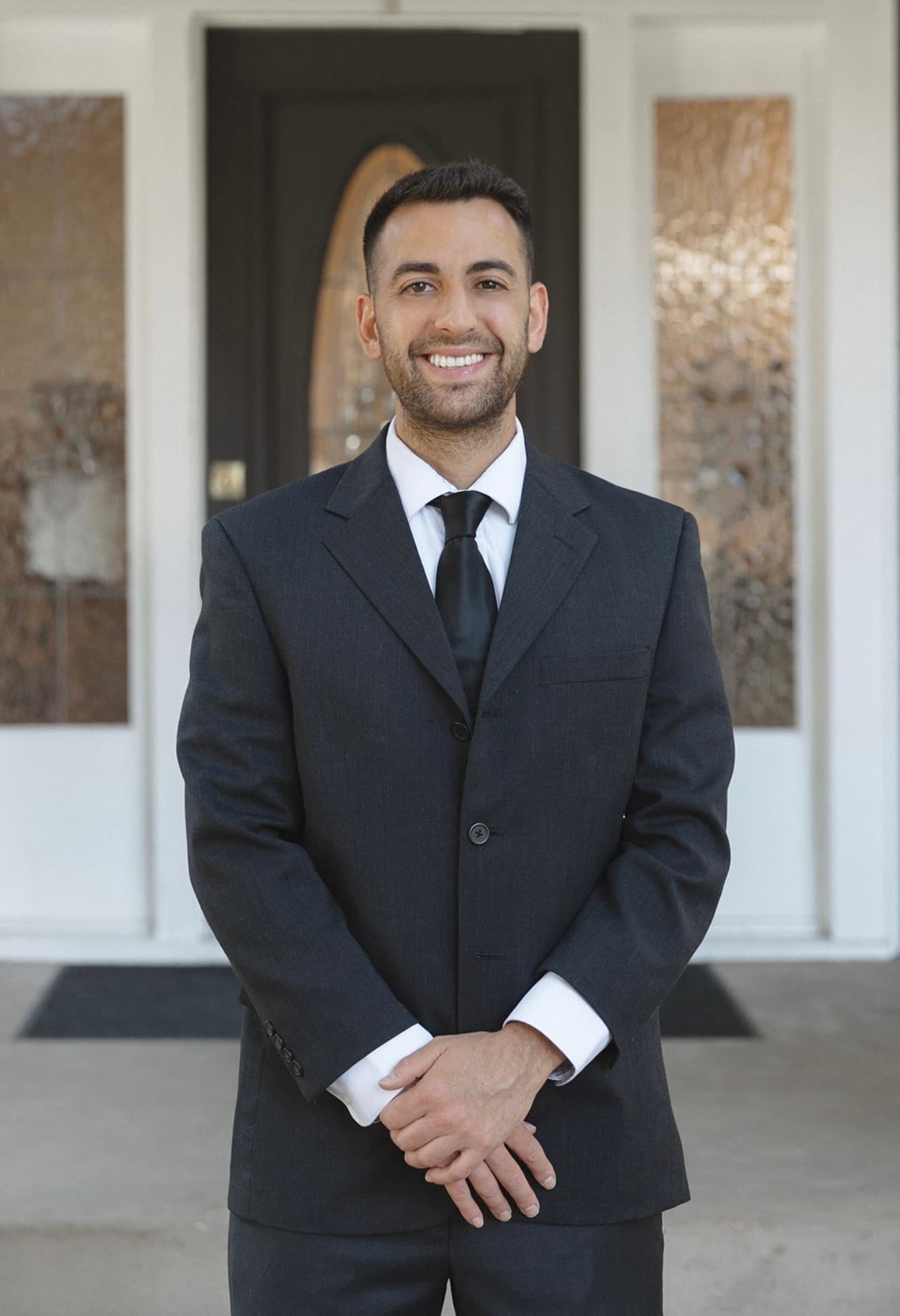
Founder & Managing Attorney, Atlas Immigration Law
Member of the American Immigration Lawyers Association (AILA) and the Dallas Bar Association. Licensed to practice in Texas; fluent in English and Spanish.
Legally reviewed by a licensed immigration attorney
Talk to an immigration attorney about your case
Free consultation on request, flat fees, and a dedicated paralegal who knows your case — serving clients in all 50 states.
This guide is general information, not legal advice, and reading it does not create an attorney-client relationship. Immigration law and procedures change, and how they apply depends on your specific facts — consult a licensed immigration attorney about your situation.