
A T visa lawyer helps survivors of human trafficking — people compelled into labor or commercial sex through force, fraud, or coercion — obtain lawful immigration status based on what was done to them. The application is Form I-914, it carries no government filing fee, and it is open to survivors regardless of how they entered the United States, including those brought here by the traffickers themselves. An approved T visa brings four years of status, work authorization, protection for close family members, and a path to a green card. Atlas Immigration Law handles T visa cases from our Dallas office for clients in all 50 states, with flat fees and a free, confidential 20-minute consultation in English or Spanish. Many survivors do not use the word “trafficking” about their own story — a confidential conversation is how that question gets answered safely.
Key takeaways
The T visa protects survivors of a severe form of trafficking — sex trafficking or labor trafficking — who are in the U.S. because of it, who comply with reasonable requests from law enforcement (with exceptions for trauma and for minors), and who would face extreme hardship if removed. Unlike the U visa, no law-enforcement certification is required, the annual cap is rarely reached, and the I-914 has no filing fee. Approved survivors can generally apply for a green card after three years or once the investigation concludes.
What counts as trafficking
The law defines a severe form of trafficking in persons in two branches. Sex trafficking is a commercial sex act induced by force, fraud, or coercion — or involving anyone under 18, where no force or fraud need be shown at all. Labor trafficking is recruiting, harboring, transporting, or obtaining a person for labor or services through force, fraud, or coercion, for subjection to involuntary servitude, peonage, debt bondage, or slavery. USCIS explains the framework on its page for victims of human trafficking and other crimes.
In practice, coercion is usually quieter than the word suggests: confiscated passports, manufactured debts that never shrink, threats to report a worker to immigration, threats against family abroad, wages withheld to compel staying. Someone who came to the U.S. willingly for a job that turned into something they could not leave may absolutely be a trafficking survivor under this definition. That is why screening belongs with a lawyer, not with a checklist.
The four requirements
- Victim of a severe form of trafficking — sex or labor trafficking as defined above.
- Physically present in the U.S. on account of the trafficking — including survivors who escaped their situation and remained, and in some circumstances those allowed entry to participate in an investigation.
- Compliance with reasonable requests from law enforcement in the investigation or prosecution — with two important exceptions: survivors under 18, and survivors unable to cooperate due to physical or psychological trauma, are excused from this requirement.
- Extreme hardship involving unusual and severe harm if removed from the United States — a standard proven through the survivor’s circumstances, medical and psychological needs, safety risks including re-trafficking, and conditions in the home country.
T visa or U visa — which fits?
| Feature | T visa | U visa |
|---|---|---|
| Who it protects | Survivors of sex or labor trafficking | Victims of a broader list of qualifying crimes |
| Law-enforcement signature | Helpful but not required — the I-914 Supplement B is optional | Required — the I-918 Supplement B certification is mandatory |
| Annual cap | 5,000 principals — rarely reached, so no multi-year waitlist | 10,000 principals — long queue with a bona fide determination bridge |
| Cooperation requirement | Comply with reasonable requests; minors and trauma cases excused | Helpfulness required; certifier attests to it |
| Green card | Generally after 3 years in T status — or sooner if the investigation concludes | Generally after 3 years of continuous presence in U status |
Many trafficking survivors technically qualify for both, since trafficking is itself a U visa qualifying crime — but the T visa’s optional certification and uncapped-in-practice numbers often make it the faster, stronger path. Some cases file one with the other held in reserve. A survivor abused by a spouse or parent with immigration status may additionally have a VAWA self-petition worth screening. Choosing the sequence is exactly the kind of judgment call our humanitarian practice exists for.
Wondering where your case fits in these timelines?
Request a free consultation and get a straight answer on your category, your realistic timeline, and the flat fee — before you commit to anything.
The T visa process, step by step
| Stage | What happens |
|---|---|
| 1. Confidential consultation | A trauma-aware screening of what happened against the legal definition — many survivors learn here, for the first time, that the law has a name for their experience. |
| 2. Declaration and evidence | The survivor’s statement is built in short sessions, supported by any records that exist: messages, pay stubs or their absence, medical and counseling records, witness statements. |
| 3. Optional law-enforcement contact | Where safe and strategic, a report or an I-914 Supplement B endorsement strengthens the record — but the case does not depend on it. |
| 4. I-914 filing | The application, hardship evidence, any inadmissibility waiver, and family members’ Supplement A forms are filed with USCIS — no filing fee. |
| 5. Approval and T status | Four years of lawful status with employment authorization; certain public benefits may also become available. |
| 6. Green card | Adjustment of status is generally available after three years in T status, or earlier if the investigation or prosecution is complete. |
Protection for family members
T visa derivatives are broader than most categories, because traffickers so often control victims through threats against family. Survivors 21 or older can include a spouse and unmarried children under 21; survivors under 21 can also include parents and unmarried siblings under 18. Where a family member faces present danger of retaliation because of the survivor’s escape or cooperation, the law extends further still. Getting every eligible relative into the filing at the start — including family abroad — is one of the most consequential early decisions in the case.
Confidentiality, and immediate help
T visa cases are protected by the same federal confidentiality statute that covers VAWA and U visa filings — USCIS cannot disclose the case, and traffickers have no role in it. Consultations with our office are privileged and free. For immediate, confidential help outside the legal process, the National Human Trafficking Hotline is available around the clock at 1-888-373-7888.
Common complications a lawyer manages
- Things the survivor was made to do. Unlawful acts committed as a direct result of the trafficking — working without authorization, entering illegally, even certain offenses — can be explained and often waived; they are part of the story, not a bar to telling it.
- Fear of law enforcement. Because the Supplement B endorsement is optional, a case can be built and filed before any decision about police contact is made — and the trauma exception can excuse cooperation entirely where it applies.
- No paper trail. Traffickers rarely issue documents. Cases are routinely won on a detailed, credible declaration supported by circumstantial evidence and expert or counselor letters.
- Removal proceedings. A pending court case changes sequencing, not eligibility — coordination between the court and USCIS filings is essential.
Costs and timeline
There is no government filing fee for the [Form I-914](https://www.uscis.gov/i-914) application itself, and fee waivers are available for most associated forms, including inadmissibility waivers. The remaining cost is attorney fees, and Atlas handles T visa cases on a flat fee quoted up front — one defined number for a defined scope, agreed at the consultation, which matters enormously to people rebuilding their finances after exploitation.
Because the T visa’s 5,000 annual cap is rarely reached, there is no structural waitlist like the U visa’s — but adjudication times still run long and vary with USCIS workloads, so we point clients to current processing times instead of quoting numbers that age badly. Work authorization arrives with approval, and the three-year clock toward a green card starts running in T status.
How Atlas Immigration Law helps
T visa cases demand two skills at once: rigorous legal framing of the force-fraud-coercion elements, and the patience to build a survivor’s declaration without re-traumatizing the person telling it. Jordan Weinberg, our founder and managing attorney — licensed in Texas, member of AILA and the Dallas Bar Association — builds these cases with both.
- Free, confidential 20-minute consultation, in English or Spanish, by phone or video if that is safer.
- Flat, transparent fees agreed before any work begins — no hourly meter.
- A dedicated paralegal and same-business-day responses, because questions in these cases rarely feel like they can wait.
- Atlas Vision client portal for secure document uploads and real-time case tracking.
- Dallas office at 1920 McKinney Ave, serving survivors in all 50 states — trafficking cases arise everywhere, and this practice travels.
Frequently asked questions
What qualifies as human trafficking for a T visa?
Either sex trafficking — a commercial sex act induced by force, fraud, or coercion, or involving anyone under 18 — or labor trafficking, meaning labor or services obtained through force, fraud, or coercion, including debt bondage and involuntary servitude. Confiscated documents, manufactured debts, and threats of deportation are classic coercion, even when the person originally came to the U.S. willingly.
Do I have to report my traffickers to the police to get a T visa?
Not always. The law requires compliance with reasonable requests from law enforcement, but survivors under 18 and those unable to cooperate because of physical or psychological trauma are excused. Unlike the U visa, a signed law-enforcement endorsement is helpful but not required, so a case can be built before any decision about police contact.
Can I apply for a T visa if I entered the United States illegally?
Yes. Many survivors were brought across the border by the traffickers themselves. Unlawful entry and most other immigration violations — especially those that resulted directly from the trafficking — can be waived as part of the application, and there is no fee barrier to requesting that waiver with a fee waiver.
Does the T visa lead to a green card?
Generally yes. T status lasts four years, and most survivors can apply for adjustment of status to permanent residence after three years — or earlier if the investigation or prosecution of the trafficking is complete — provided they meet the good moral character and related requirements.
Can my family get status through my T visa?
Yes. Survivors 21 or older can include a spouse and unmarried children under 21; survivors under 21 can also include parents and unmarried siblings under 18. Additional protection exists for family members facing present danger of retaliation. Family abroad can be included and processed through a U.S. consulate.
What is the difference between a T visa and a U visa?
The T visa is specifically for trafficking survivors, does not require a law-enforcement certification, and its 5,000 annual cap is rarely reached — so there is no multi-year waitlist. The U visa covers a broader list of crimes but requires a signed certification and carries a long capped queue. Trafficking survivors often qualify for both, and the choice is strategic.
How much does a T visa lawyer cost in Dallas?
USCIS charges no filing fee for the I-914 application, and fee waivers cover most related forms. Attorney fees vary by firm; Atlas Immigration Law quotes a flat fee after a free, confidential 20-minute consultation, so the full cost is known before you decide anything.
This guide is part of our humanitarian immigration services — the service page covers eligibility, fees, and how we handle these cases.
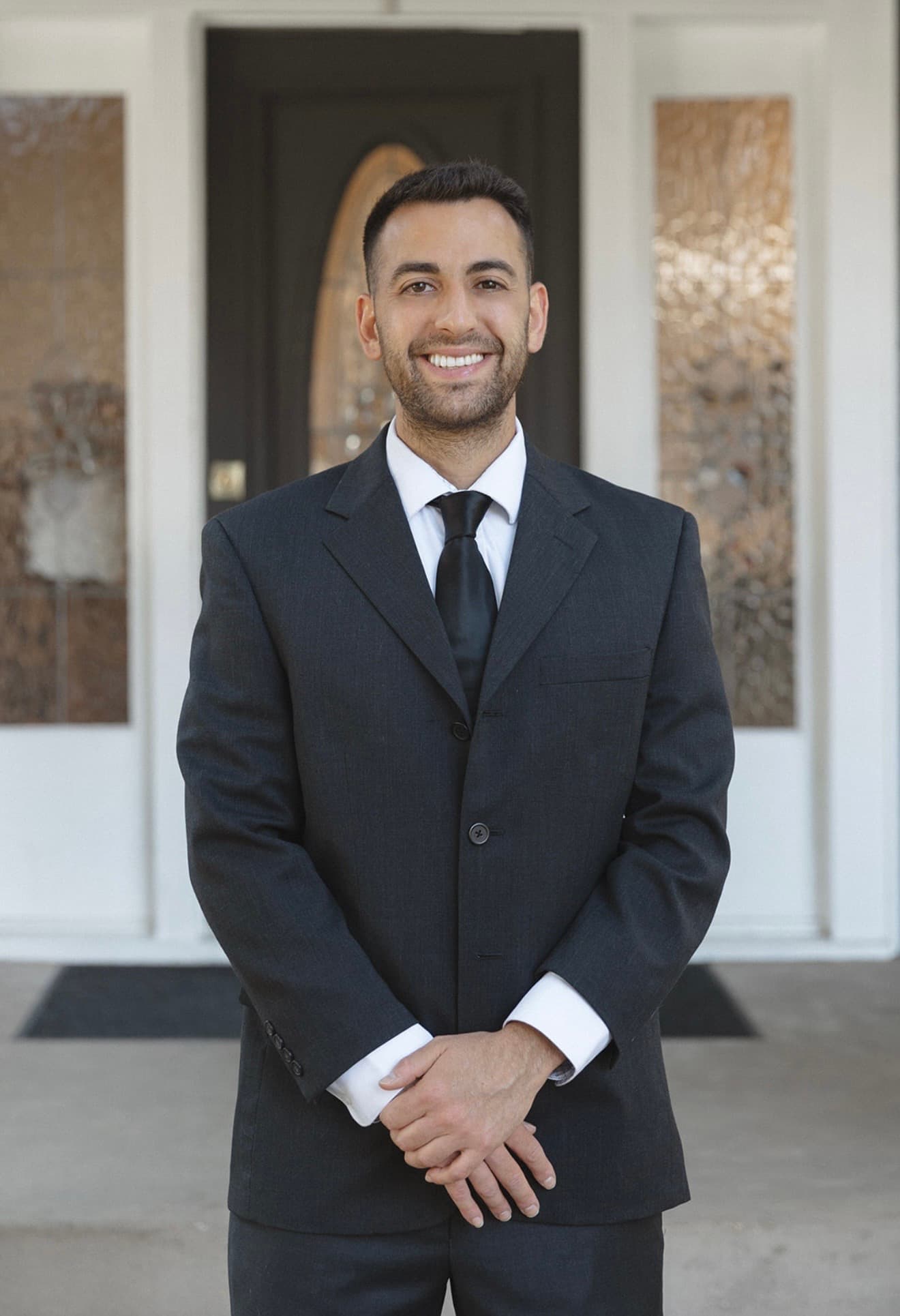
Founder & Managing Attorney, Atlas Immigration Law
Member of the American Immigration Lawyers Association (AILA) and the Dallas Bar Association. Licensed to practice in Texas; fluent in English and Spanish.
Legally reviewed by a licensed immigration attorney
Talk to an immigration attorney about your case
Free consultation on request, flat fees, and a dedicated paralegal who knows your case — serving clients in all 50 states.
This guide is general information, not legal advice, and reading it does not create an attorney-client relationship. Immigration law and procedures change, and how they apply depends on your specific facts — consult a licensed immigration attorney about your situation.